
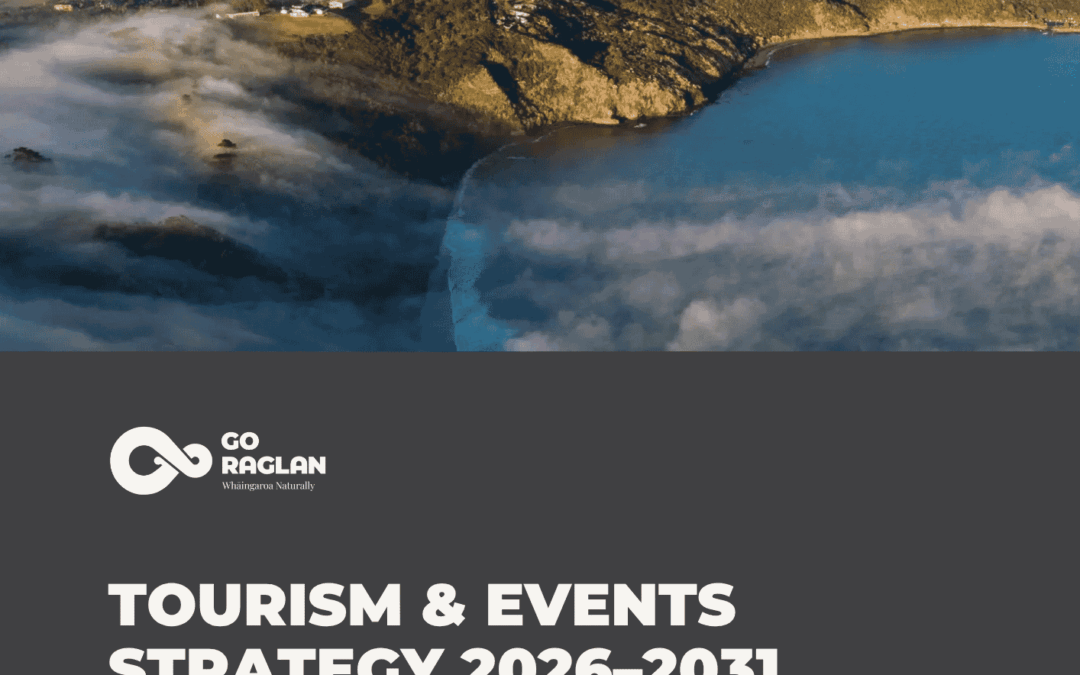
After more than a year of community consultation and research, a new five-year strategy sets out a shared vision for tourism and events in Whāingaroa Raglan.
The Go Raglan Tourism and Events Strategy 2026–2031 has been developed by the Whāingaroa Raglan Destination Management Organisation (WRDMO), in partnership with Raglan Naturally Community Trust and the wider community.
It considers how tourism and events can contribute to Whāingaroa while responding to the pressures and opportunities that come with being a well-known visitor destination.
“Tourism is already part of Raglan and it brings real benefits to our businesses and community,” says Go Raglan representative Charlie Young.
“This strategy gives us a way to look beyond visitor numbers and ask what tourism contributes to local livelihoods, the environment, the visitor experience and the wellbeing of the people who live here.”
The strategy was informed by 278 responses to the Your Voice Matters survey, along with pop-up consultation sessions, workshops, hui, workforce research and conversations with businesses and community organisations.
Independent research by the University of Waikato Management School also gathered 511 face-to-face visitor questionnaires and 30 interviews.
Community feedback showed support for tourism and events that strengthen local businesses and employment while reflecting Raglan’s environmental and community values.
People wanted more opportunities for rangatahi, stronger support for locally owned businesses and more activity outside the busy summer period. They also wanted better visitor information, local storytelling, respectful behaviour and events that suit Raglan’s character and capacity.
The strategy is built around four pou: He Ohanga Hapori – Local Livelihoods, Kaitiakitanga – Environment, Manaakitanga – Visitor Experience and He Ora Hapori – Community Wellbeing.
Together, the pou provide a framework for considering the wider effects of future decisions. An event might bring income into the town, for example, but its impacts on residents, infrastructure, the environment and visitors should also be considered.
Whaingaroa ward councillor Lisa Thomson says having a community-led strategy will help connect conversations about tourism with the wider needs of Whāingaroa.
“Tourism touches many of the issues our community regularly raises, from infrastructure and transport to employment, housing and environmental care,” she says.
“Having a locally developed strategy gives us a clearer picture of what the community values and stronger evidence when we advocate for investment and work with council and other agencies.”
Some of that work is already underway through Go Raglan Jobs, the Go Raglan Accommodation pilot and local economic and event impact reporting.
Other proposed actions include supporting community-led and shoulder-season events, promoting local products and experiences, improving walking, cycling and visitor information, strengthening low-waste event practices and developing employment and training pathways for rangatahi and hapū.
The strategy also calls for continued community sentiment research, monitoring of tourism impacts and regular public reporting over the next five years.
The full Go Raglan Tourism and Events Strategy 2026–2031 is available at https://qrco.de/bh1TLD